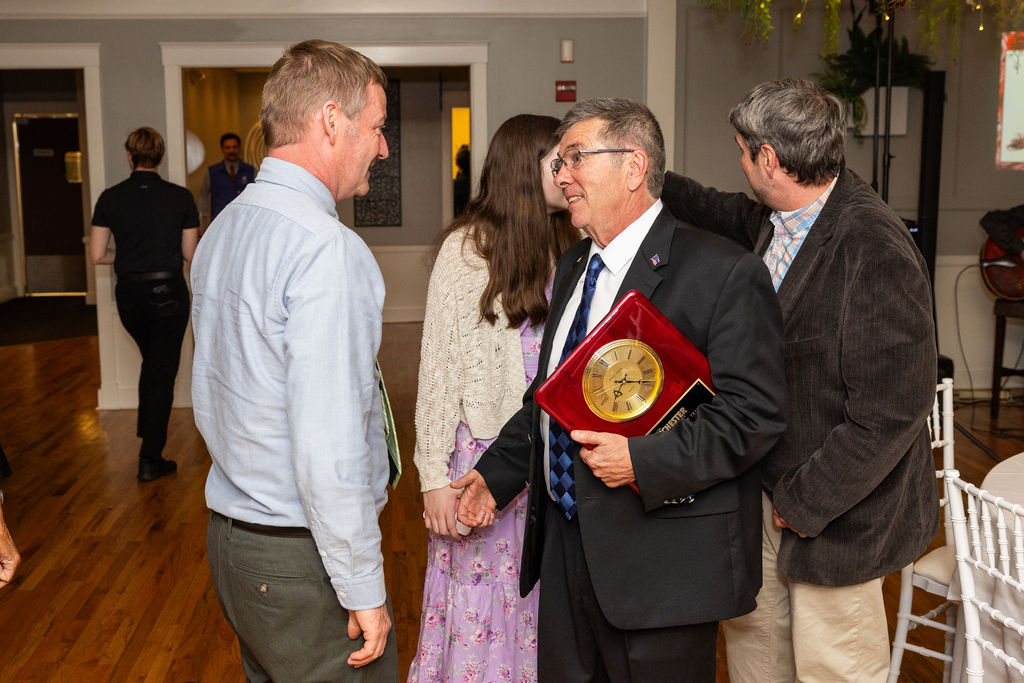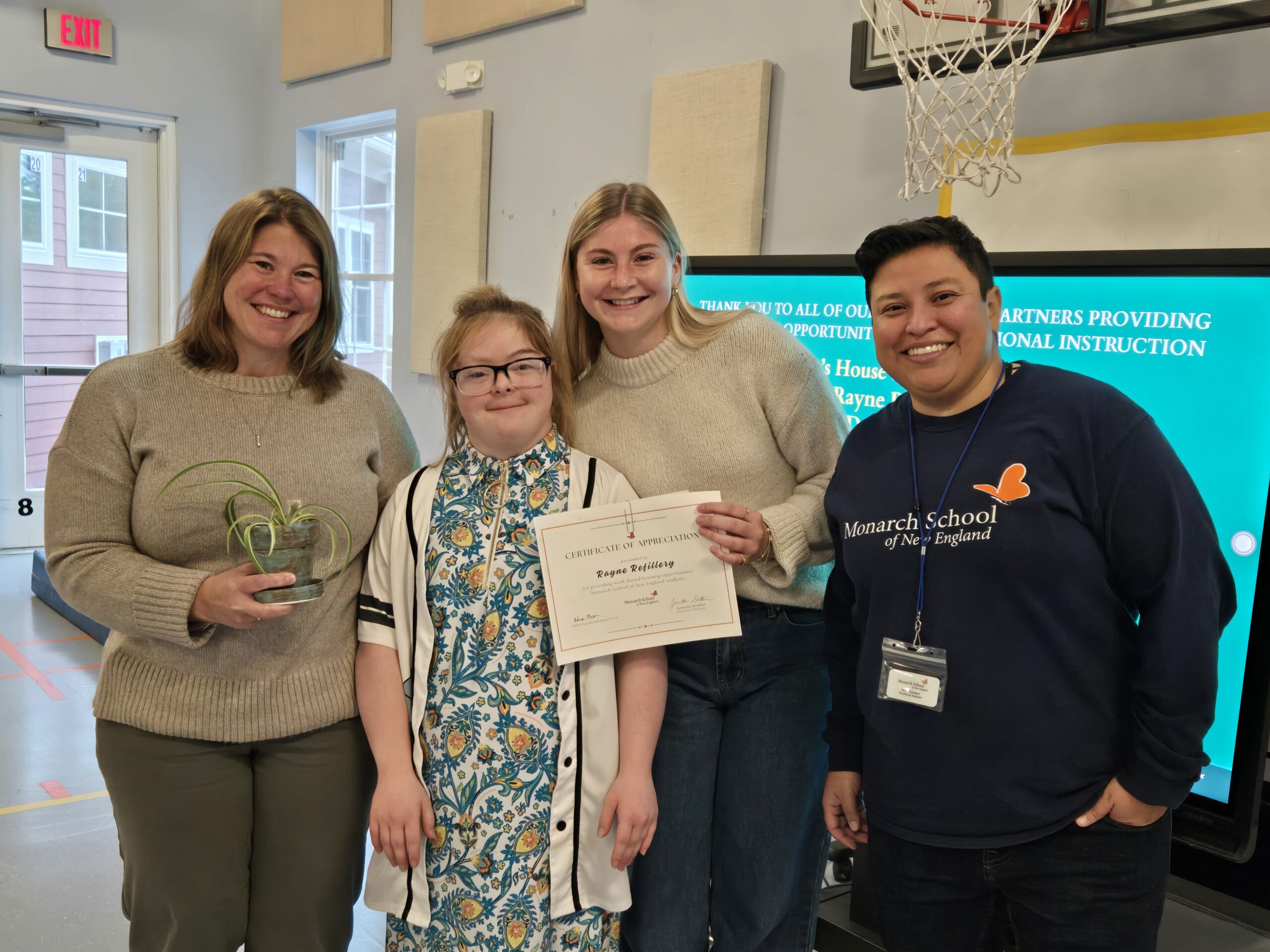
Monarch School of New England welcomed its dedicated work-based learning partners on Thursday, November 13, for a special Employer Appreciation Breakfast held at the school’s High School and Vocational Center. The event honored the local businesses and organizations that open their doors to Monarch students, providing meaningful job-training, skill-building, and career exploration opportunities throughout the year.
Executive Director Jeanette Souther opened the morning with remarks highlighting the profound value of collaboration between Monarch and its community partners.
“Work-based learning opportunities are a cornerstone of the Monarch educational experience,” Souther said. “Our partners give students the chance to grow their skills, build confidence, and discover what’s possible. We are deeply grateful to the many businesses that invest their time, guidance, and heart in helping our students thrive.”
Following the program, guests were presented with thank-you certificates and a small token of appreciation. Attendees also enjoyed guided tours of the school – several led by Monarch students themselves – providing an inside look at the vocational programs, classrooms, and hands-on learning environments their partnership helps enrich.
The breakfast itself was prepared by Monarch students, showcasing the culinary skills they developed through the school’s vocational training initiatives and further underscoring the event’s theme of partnership and possibility.
Monarch School of New England extends heartfelt thanks to all of its work-based learning partners for their ongoing support and commitment to empowering students of all abilities.
Monarch School of New England is a nonprofit, specialized day school located in Rochester, NH, serving students across New Hampshire and Southern Maine, ages 5–22 who experience significant physical, medical, and developmental disabilities. Rooted in the belief that each child deserves an environment in which they can flourish, Monarch creates educational plans based on the individual needs and capabilities of each student – their abilities, not their disabilities; helping support every student to learn and to reach their greatest potential.