A message from the Rochester Historical Society and Museum:
For the past several weeks, on Monday evenings, members and friends from the public have been meeting at 6 p.m. at our museum to view an acclaimed documentary about the founding of our country.
The meeting on July 27 had a few additional attendees, which was reassuring to see. Please remember that we always welcome you, and you’re encouraged to bring a friend or two if you wish.
The portion of the documentary this past Monday evening dealt mainly with the background of why the Colonists were dissatisfied with the treatment they experienced from England. The feeling was growing, thanks in large part to the efforts of Samuel Adams, for one, who published information and saw to it that it was disseminated to the more southern colonies. This was done so that people in Virginia or Georgia, for instance, would know of events that took place in Boston and realize how unfair some of the British responses were. This awkward situation was complex because the people in America were basically British and therefore loyally bound to obedience to the Crown. As we saw in the documentary, however, that loyalty began to erode. Sam Adams, always careful to maintain an appearance of loyalty, merely asked an important question as incidents began to accumulate: if Americans were British subjects, then why weren’t they entitled to the same treatment that Parliamentary rule promised all British citizens? The rising tide of feeling among the Colonists was that they were not being treated fairly and therefore resented not having self-rule. Even some British leaders were sympathetic to this line of thought, such as John Adams.
A number of important, sparking events occurred. The main one was the confrontation at Lexington, followed in quick succession by the one in Concord. Distrust and suspicion had risen to a dangerous level, and when the British heard rumors that the Colonists were arming themselves, soldiers set out to find those who were storing arms and possibly planning rebellious actions. When soldiers met in Lexington on that fateful day in 1775, each side was keyed up and on edge. It was never learned who or what caused a gun to go off, but a shot was heard. This was against all orders. But in the tension of the moment, it ignited a fuse that would not go out. Another meeting in Concord was even more deadly, particularly for the British. The tragic complexity of the situation was that the Colonists were basically British. But from that moment on, the “shot heard ’round the world” would echo on and on for years until we gained independence.
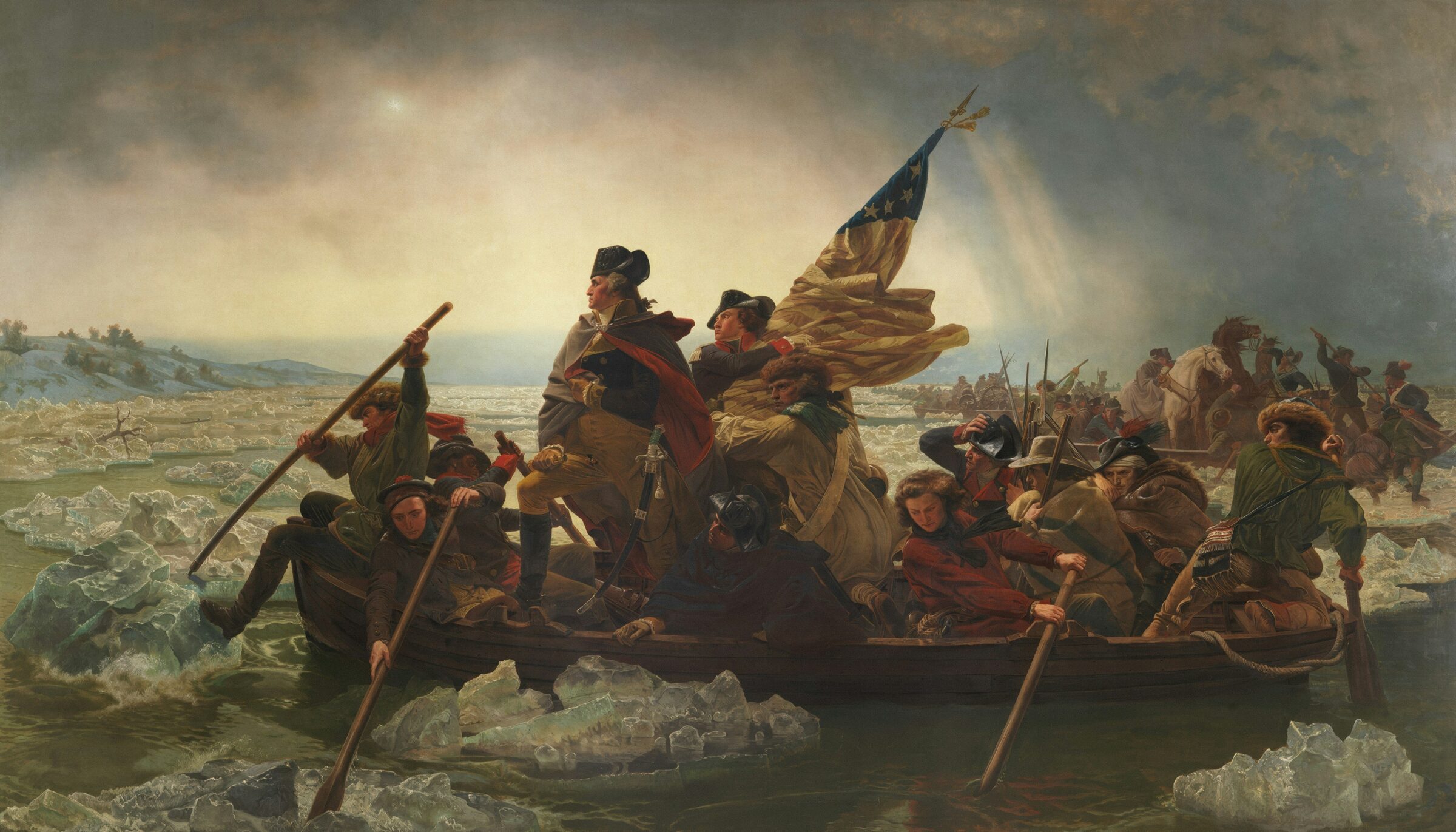
The documentary again reminded us why George Washington is depicted on our most basic unit of currency. The man was held in extraordinarily high regard by everyone who knew him—even by the British. (There’s a statue of him near Trafalgar Square, outside the National Museum in London. It was placed there in 1921, I believe.) His men regarded him as the ultimate leader. Just prior to the surprise attack at Trenton, Washington’s last-minute hope for a victory, the course of events did not look very promising for our obtaining self-rule. But he surprised the Hessians, who had been employed by the British to help them, and they were defeated. Word spread of the debacle, and new, hot blood rushed through the hearts of Americans. When Washington explained to his troops that victory lay within their grasp, he urged the men to extend their enlistments in the Continental Army. They did. The revolutionary cause took on a renewed seriousness of purpose.
Battle scene enactments were balanced with moments of frivolity during the documentary to remind us of the reality that has always existed in the affairs of men: while soldiers fought, some of their leaders partied and enjoyed ballroom ceremonies. Some leaks of information occurred. The grim job of burying dead soldiers had to take place. Both sides lost. Both sides suffered grievous damage.
The documentary established the point that weaponry at that time was notoriously poor. Guns were not accurate. The rifles the Colonists had been allowed to keep were earlier versions of the weapons of that era. Hitting targets was a difficult task. Perhaps this partially explains an interesting fact about Washington: his amazing resilience and daring in battle. His clothing had been struck, including his hat, but he never actually suffered a flesh wound during the entire war. Yet he was truly in the thick of it most of the time.
The tedious difficulties of transportation were made clear by the documentary. Moving stealthily into a favorable position over an opponent was not done quickly or easily in the 1770s. It took time, and various wins and losses occurred unexpectedly, resulting in intrigue and even defiance of orders. In the next episodes, we will learn of the treachery of Benedict Arnold.
I think we can all agree that the founding of this nation was an astounding event. When we look back at all that transpired, we are amazed. The Colonists who desired liberty endured great hardships to bring it about. Some men in Washington’s army marched with bare feet through snow-covered terrain because they lacked footwear. The desire for freedom is a power to be reckoned with.
We meet again on Monday evening, August 10, at 6 p.m. sharp.
Ralph Montgomery
RHS President