Rochester Colonial Moments, a historical series highlighting notable moments from Rochester’s past, in collaboration with the Office of Mayor Chuck Grassie, is brought to you by Patrick O. Connelly, Rochester, New Hampshire, historian.
In this edition:
Rochester N.H. First Meeting House Part VI
In this final article on the 18th century meeting houses of the Town of Rochester, N.H., we will investigate the pew structure and settlement process of the congregants who bid for pews in the new meeting house. The families who bid for these pews were the elite of the social and economic components of the town. These names most often found their way into town records by being nominated to town offices. They were those individuals and families that had made consistent contributions to the betterment of the town. Further, their economic condition enabled them to focus time and energy away from the subsistence mandate of husbandmen and management mandate of yeomen farmers.
The pew bidding process was well defined. In the town meeting of May 13, 1780, the town outlined the critical elements of such an undertaking.[1]The committee consisting of Mr. Jabez Dame, Col. John McDuffee and Capt. John Brewster was formed to administer the undertaking to including the auctioning of pews and procuring or purchasing the land upon which the new meeting house would stand.
The location of the pew was identified in a plot of the meeting house and bids were taken to determine who the highest bidder was for each pew. Then, the winning bidder was empowered to secure services to build the pew. The town would use the funds collected in the bidding process to fund the building of the meeting house and supplement the monies raised by the town through taxes.
Payment for the successful bid was described in the minutes of the town[2]mostly in kind, that is, the family would provide some sort of resource: labor, lumber, nails, rum etc. to fuel the building process. These goods and services would be delivered as required over the course of the years of the building process. Excellent records were maintained in the construction of the second meeting house and by way of an example, this following is the accounting for the pew of the most expensive pew, that of Major Ebenezer Tebbets.
In this way, the 42 pews located on the floor and another 22 locations in the upper gallery supplemented the £10,000 committed by the town to build the second meeting house in the First Parish of the Town of Rochester, N.H.[4] The reader may recall that the original estimate of the cost was £ 11,184-1-0.[5]
It is interesting to note, that the layout of the pew structure is consistent with most of the congregational churches in New Hampshire in this period. In particular, the meeting house in Sandown, N.H. retains much of its original pew structure and compares well to the structure of Rochester’s second meeting house.
On September 26,1780 the town had voted to confer the committee with rights to exchange part of the Ten Rod Road with Mr. James Horn for the land where the new meetinghouse “now stands”. [6] It is informative that a miscellaneous manuscript among the town’s original records there was included a map of Norway Plains 1788[7]. That map in its southern portion of the upper town, identified the location of the meeting house in the town commons. If remained in that location until moved to the current location of the First Congregational Church near the library on South Main Street.
The journey into Rochester colonial history continues…
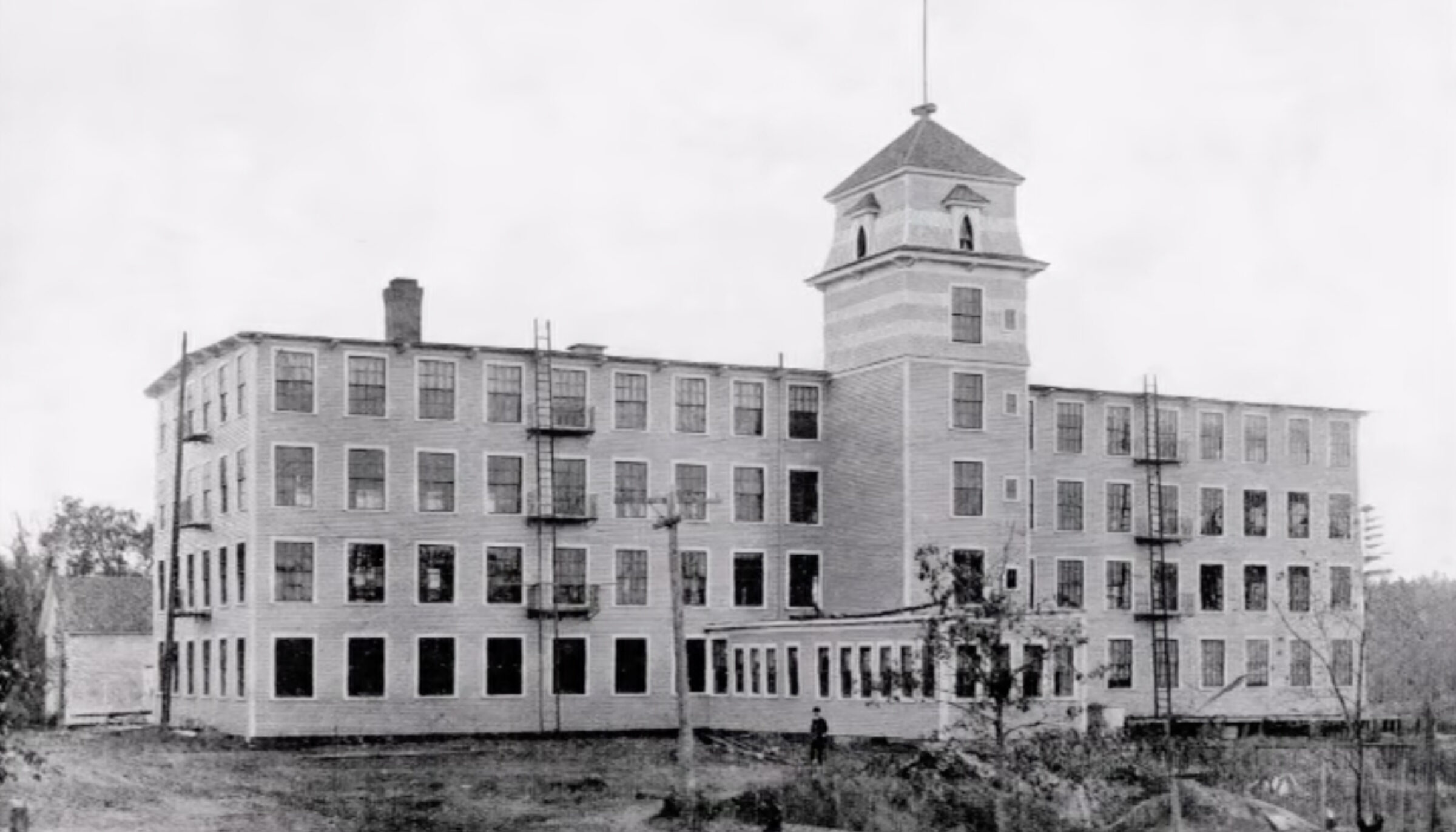
Despite the continuing conflict with England, communities such as Rochester, N.H., remained focused on public service and improvements needed to support a growing population. Records associated with the construction of the second meeting house—particularly those documenting the time and expense involved, provide researchers with a wealth of information.
At the town meeting on May 29, 1780, voters expanded the committee responsible for building the new meeting house, directed that work begin immediately, and authorized the town to procure or purchase the site. The committee consisted of Jabez Dame, John McDuffee, and John Brewster.
Time Required for Construction
The accounting indicates that preparations had begun well before the 1780 raising. A report presented to the committee and the town in September 1780 recorded the labor devoted to each stage[8]:
| Days | Work recorded |
| 99 | Cutting and hewing the large timber in the woods in the uppermost part of town in 1779 |
| 116 | Hauling the above timber in March 1775 |
| 330 | Cutting and hauling the remainder of the timber in the previous spring [1779] |
| 189 | Hewing all the timber after it had been hauled to the site where the meeting house stood |
| 237 | Framing and planing the timber and procuring the spars and other materials needed to raise and underpin the frame |
| 36 | Digging and hauling stones |
These tasks—and others not itemized—would have been necessary to raise and fit the meeting house. The work may have occurred at intervals during the five years leading up to the building’s raising in 1780.
Recorded Costs
A separate accounting listed the costs attributed to raising the new, or second, meeting house:
| Item | Recorded amount |
| 1,157 days at £7 (=$10) per day for approximately three years | £8,677-0-0 |
| Paid Capt. Tuttle for 11 days’ work at £18 per day | £162-0-0 |
| Paid Tobias Twombly for 11 days at £12 per day | £132-0-0 |
| Timber purchased by the committee for the frame and raising of the meeting house | £490-0-0 |
| 31 gallons of rum at 96, with sugar paid at £3 | £930-12-0 |
| 7 barrels of cider at £36 and 2½ bushels of meat at £5 | £73-10-0 |
| 98 pounds of salt pork at £3 and 168 pounds of veal at £24 | £558-0-0 |
| 1 bushel of peas at £30, 1 peck of beans, and 6 pounds of butter | £89-18-0 |
| 2 bushels of potatoes, 2½ hundred nails, and 4½ pounds of iron | £94-15-0 |
| Boarding Capt. Tuttle and Tobias Twombly for 17 days | £51-0-0 |
| 8 pounds of Chad at 12s per pound | £4-16-0 |
| Total recorded amount | £1,184-1-0 |
The town’s records also offer future researchers a glimpse of the period’s comparative cost structure. In the labor entry above, £7 was equated with $10 in 1780 currency. These were colonial dollars, valued considerably below the British pound sterling.
Both time and money were at a premium. To supplement tax revenue, the town auctioned to community members the right to build pews. The final article on Rochester’s second meeting house—the town’s last meeting house built in the eighteenth century—will examine the design and accounting of its original pew arrangement.