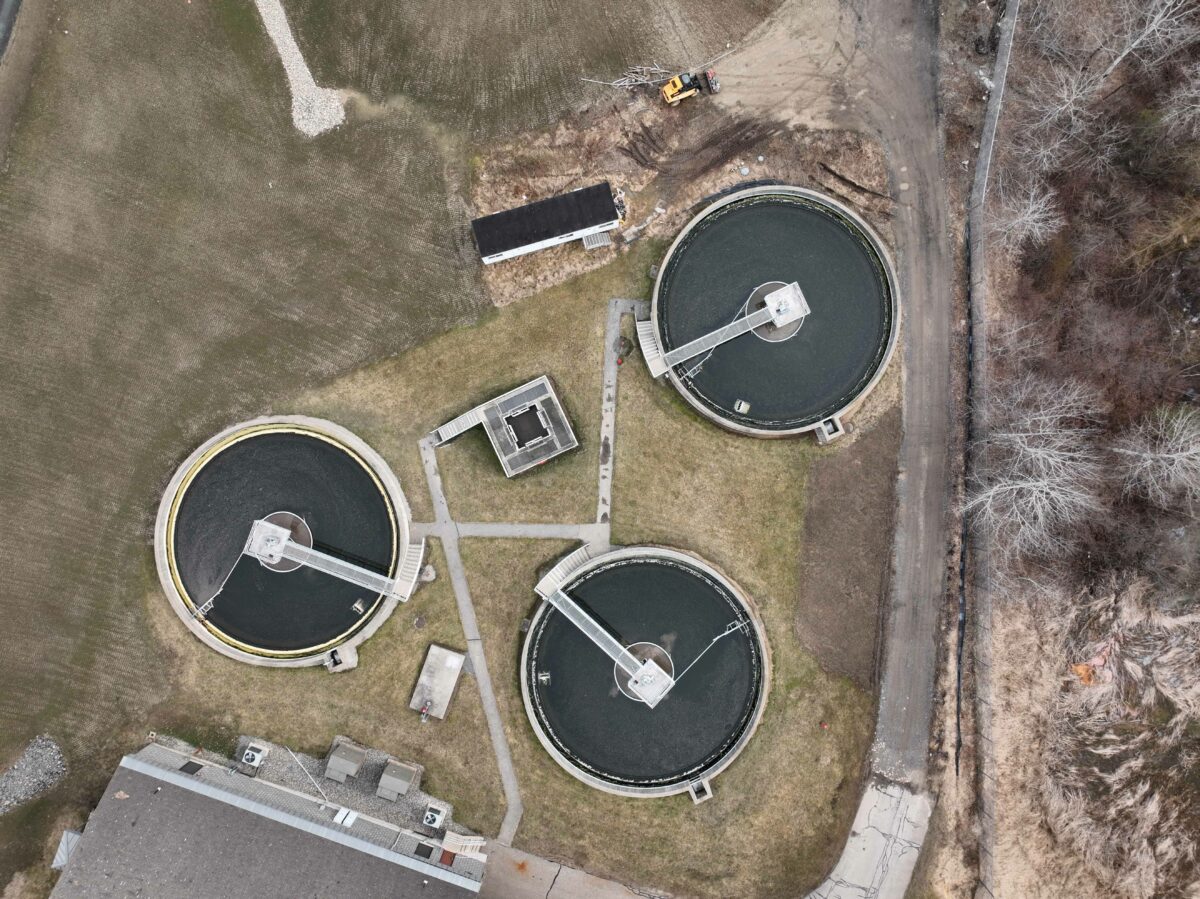
The City is moving forward with its planning for large upgrades to its wastewater facilities, which must be fully operational by November 1, 2032.
With the issuance of the Great Bay General Permit for Nitrogen in 2021 to 12 communities, including Rochester, and the issuance of Rochester’s Individual Permit in 2024, the City must dramatically decrease total nitrogen and total phosphorus in its effluent discharge.
The nitrogen levels in discharges from these many communities, including Rochester, were required by the EPA to prevent eelgrass loss in the Great Bay Estuary. However, despite many millions of dollars in community wastewater improvement projects, eelgrass is at its lowest extent in decades.
Prior to permit issuance, Rochester and other communities long advocated that the stressors on eelgrass were much more complex than could be attributed to nitrogen alone. EPA disagreed and, under the broad authority granted to it by the Clean Water Act, mandated significant reductions without allowing any credit for the natural attenuation of nitrogen from Rochester’s outfall along 11 miles of the Cocheco River prior to its entry into the Estuary. Fortunately, Rochester has been decreasing its total nitrogen discharge levels for over a decade using innovative, relatively low-cost technology and is currently complying with its total nitrogen discharge limits. Large upgrades to reduce total nitrogen would be required should the EPA again reduce the limits in a future permit reissuance.
Rochester was issued a highly stringent total phosphorus limit for its effluent discharge under its Individual Permit. The EPA believed that current phosphorus levels were harming the Cocheco River by promoting algal growth. Again, Rochester advocated for defensible science to substantiate this claim of harm to the river. Although, in the opinion of the City, this position was not adequately supported, the EPA mandated one of the lowest limits it has issued in the United States.
In 2024, the City Council initiated a Wastewater Upgrades Advisory Committee consisting of multiple engineering consultants, City Councilors, staff professionals from multiple departments, and a representative from the New Hampshire Department of Environmental Services. The group’s goal is to provide a transparent process to review technical options to further reduce nitrogen and phosphorus and eventually design the required upgrades. These upgrades will also consist of capacity improvements so that Rochester can continue to grow as a home for businesses and residents.
Construction of these upgrades will be significantly expensive, and sewer rates are expected to more than double to fund them. Construction is anticipated to start in 2028, with operational compliance required by the end of 2032.