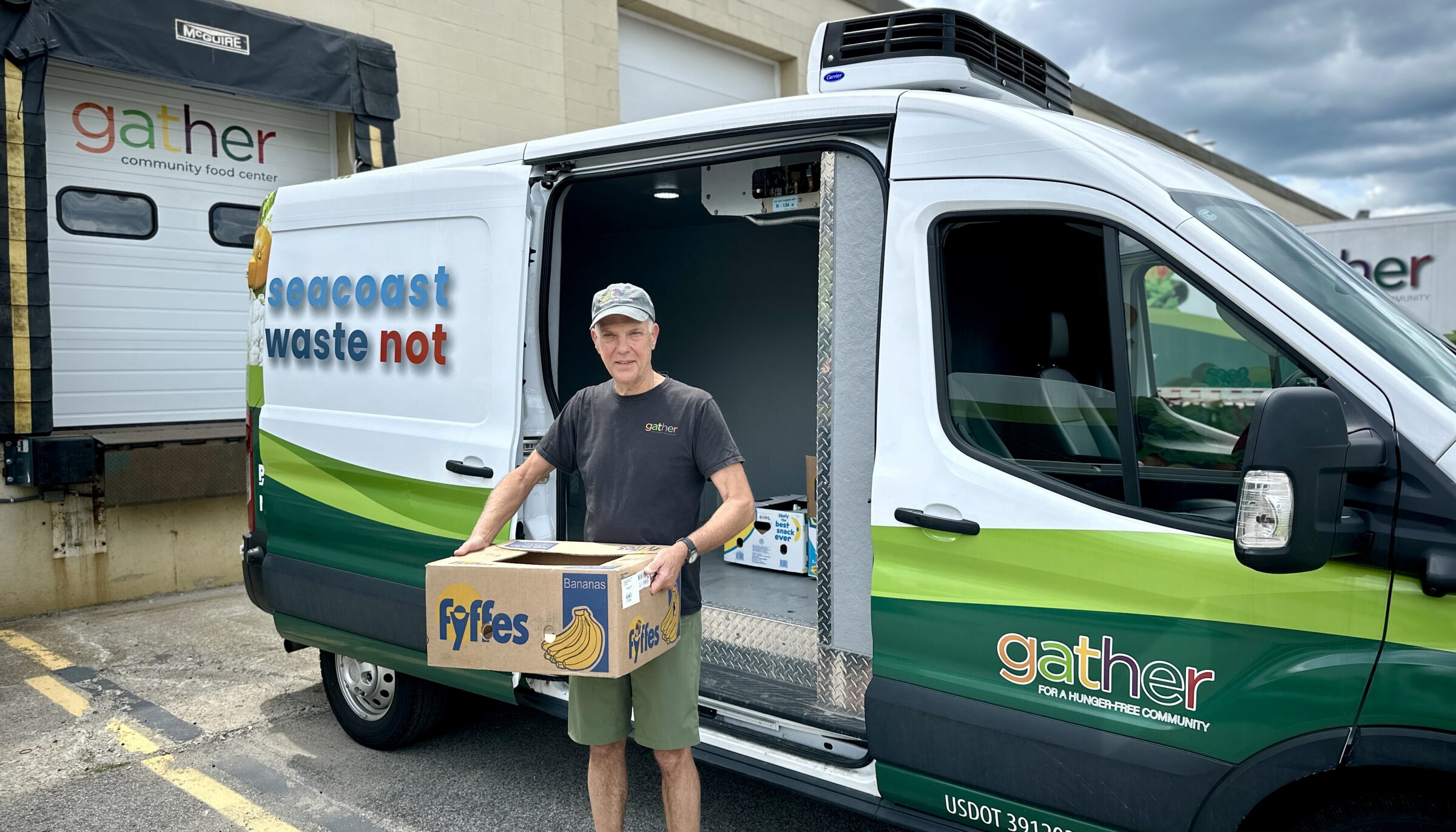
Innovative regional partnership network turns surplus food into more than 175,000 meals for community members in need
Gather is celebrating a major milestone for its Seacoast Waste Not (SWN) program, which has now rescued more than 250,000 pounds of quality surplus ingredients in just two years – transforming food that would otherwise go to waste into nutritious meals for thousands of residents in the Greater Seacoast Community.
What began as an idea with a small group of local chefs has quickly evolved into a dynamic regional food recovery network spanning Portland, Maine to Portsmouth, NH to Boston, MA.
At a time when food insecurity and food waste continue to exist side-by-side, Seacoast Waste Not addresses both challenges through a coordinated system that safely recovers and redistributes high-quality surplus food from across the food service industry.
According to Tania Marino, Gather’s Deputy Director, who spearheaded the program, the program is a collaboration with more than 70 organizations, including restaurants, caterers, schools, country clubs, farms, fisheries, distributors, and manufacturers. Gather’s refrigerated vehicles are on the road daily responding to food recovery requests throughout the region.
The program focuses on rescuing fresh produce, meat and other proteins, prepared foods, and other quality food items that can be quickly made into professionally prepared meals through Gather’s Cooking 4 Community program and distributed through the organization’s pantry market and mobile markets.
Tuckaway Tavern was an early supporter and has been an active participant: “I’m very proud of how the team at Tuckaway has built a culture where giving back and supporting the community is something we genuinely care about,” says Paul Simbliaris of Tuckaway Tavern. “It’s very rewarding to know that we can play a part in helping our neighbors.”
Gather estimates the recovered food has helped create more than 175,000 nutritious meals for the community over the last two years. Approximately 93% of every meal produced through Gather’s Cooking 4 Community program now comes from donated food — much of it sourced through Seacoast Waste Not partnerships.
Beyond hunger relief, the program is also producing measurable environmental benefits. Gather estimates more than 250,000 pounds of food have been diverted from the waste stream, has prevented greenhouse gas emissions equivalent to more than 100 metric tons of carbon dioxide — food waste is one of the leading contributors to methane emissions in landfills, making food recovery one of the most immediate and practical climate actions communities can take. Seacoast Waste Not addresses a substantial, ongoing concern about New Hampshire’s landfills, which have harmful effects on surrounding communities.
“After years in the food service industry, it’s incredibly meaningful to be part of an organization that has the infrastructure and commitment to truly address food waste in a tangible way,” says Korty Church, Seacoast Waste Not Manager. “We’re building real solutions that not only reduce waste but transform quality surplus food into meals that support our community.”
According to Church, the estimated value of the recovered food is nearly $800,000, helping strengthen Gather’s ability to expand services while also providing food industry partners with a reliable and mission-driven outlet for quality surplus food.
“Growing up on a farm in New Zealand, I was raised with the belief that food should never be wasted,” says Marino;. “Seacoast Waste Not is about more than food recovery. It’s about helping build a culture of sustainability alongside partners who genuinely want to make a difference.”
Marino was recently recognized by New Hampshire Hunger Solutions with its Innovator of the Year Award for her leadership in developing and launching the Seacoast Waste Not initiative.
The program has also received support through the United States Environmental Protection Agency Thriving Communities Grantmaking Program, recognizing Seacoast Waste Not as an innovative, community-driven environmental solution with the potential to serve as a replicable national model for other hunger relief organizations.
“Seacoast Waste Not is a powerful example of Gather’s more than 200-year legacy of innovation and community responsiveness,” said Anne Hayes, Executive Director of Gather. “This program reflects our commitment to bringing together sustainability, partnership, and food access in a way that creates lasting impact for our neighbors and our region.”
As the program continues to grow, Gather is encouraging additional food industry partners across New Hampshire and Maine to participate in the initiative and help expand regional food recovery efforts.
For more information about Gather and the Seacoast Waste Not program, visit www.gatherNH.org